Site Collaboration: The Importance of Site Voices
Effective clinical research relies on strong partnerships between sponsors, CROs, and sites to ensure the success of trials.
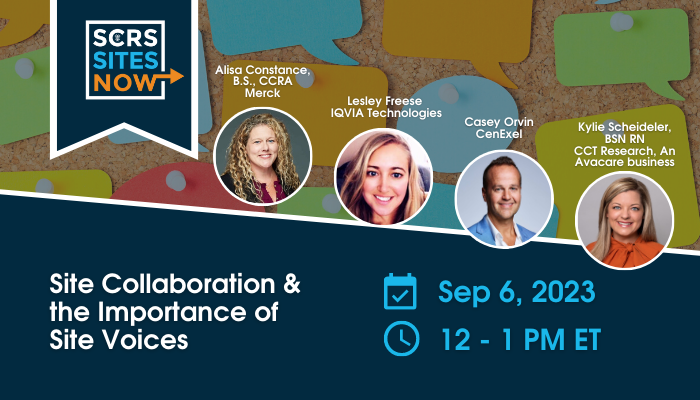
A recent panel discussion at Sites NOW shared valuable insights into how sites and industry partners can enable more transparency and better communication throughout every stage of the relationship.
Open Communication & Feedback
Building and maintaining strong relationships with research sites are crucial for successful partnerships. We have many tools for communication at our disposal, but open channels for feedback between sites and their industry partners are still underutilized.
Establishing mechanisms to collect site insights and feedback should be a top priority for both sponsors and CROs. First, explore opportunities to streamline communication between clinical research associates (CRAs), site relationship managers, and finance departments to quickly address site issues and challenges as they arise.
Regular retrospectives at the end of studies can also offer valuable insights for future decisions and site needs. Initiatives such as annual site satisfaction surveys and pragmatic budgeting can actively address site needs and bolster trust. In order to have effective collaboration between all parties, we must work to bridge communication gaps between sponsors, CROs and sites to develop a holistic and site-centric approach.
Rethinking Feasibility
Kylie Scheideler with CCT Research started the discussion stating, “We have unintentionally created this environment at the feasibility stage that is not conducive to sites. Feasibility has become a game. It’s very transactional.”
How can we change this? First, feasibility questionnaires should be much more flexible. Sites are adaptable and can tailor their capabilities to various scenarios if provided with the right support, budget, and resources.
Feasibility processes should allow sites to outline different scenarios and their potential impact on enrollment and study success, promoting realistic enrollment goals based on available resources. Sites can work to change the narrative by presenting their unique value and capabilities.
With feasibility, it’s vital to strike a balance between ambition and realism. New sites in particular should avoid making overly ambitious promises during the feasibility stage. In many instances, new sites overestimate their enrollment potential, creating a gap between expectations and reality. While enthusiasm is commendable, it’s more important to set realistic enrollment goals and be aware of the challenges in recruiting patients.
Rather than solely focusing on enrollment goals, sites should emphasize the quality of the data they can collect and their relationships with patients. While sites may have access to a pool of potential study participants, consider that patient engagement necessitates an appropriate budget to do so. Access to patients is just one part of the equation; the site’s staff must run reports, contact potential participants, and provide support to engage them effectively. Patient willingness to participate in a study can vary, and a site’s experience in engaging with patients can be a valuable asset.
Leveraging Data
Scheideler added that sites can strengthen their position during negotiations and demonstrate their value by leveraging KPIs and performance data. Key Performance Indicators (KPIs) are valuable tools for justifying budget requests and advocating for site needs. By highlighting enrollment rates, patient retention, and study completion, sites can demonstrate their competence and effectiveness to sponsors and CROs.
If sites don’t have data, focus on establishing clear KPIs from the start. These KPIs can include metrics related to patient recruitment, retention, and adherence to study protocols. New sites can demonstrate their commitment to success by setting and tracking performance metrics from the outset.
Scheideler also emphasized the importance of being proactive in building credibility. New sites should not shy away from highlighting their patient access and the quality of their patient relationships. While their enrollment goals may be more conservative, their ability to engage and collect high-quality data from patients can be a compelling selling point.
Casey Orvin from CenExel added, “Know the value of your site and your assets and use them. Use metrics. Use your experience. Use what you’ve successfully done in the past. Educate and inform and use that to your advantage.”
Hidden Costs
Approximately 32% of research sites reported declining more than 10% of study contracts due to budget constraints.
Furthermore, 12% of surveyed sites declined 20% or more of their agreements for the same reason.
These statistics underscore a growing confidence among research sites in negotiating agreements, driven by a better understanding of their operational costs and the importance of sustainable financial arrangements. Sponsors and CROs are encouraged to be receptive to site requests, acknowledging that they are grounded in genuine expenses related to executing the study effectively.
However, some sites have expressed fear of retaliation if they decline a study (i.e., the sponsor or CRO may not ask them to participate in another study if the site declines one). Sponsors and CROs are urged to keep in mind that honesty and transparency should be encouraged – never punished.
As the industry increasingly embraces technology-driven approaches, ensure research sites are equipped with the necessary information to understand the true costs of conducting a trial. To make appropriate decisions, sites need more information early on, especially if a study needs to utilize new platforms or implement diversity, equity, and inclusion plans.
Improving Technology Implementation
Usability testing is essential to ensure technology is user-friendly and meets end-user needs. Sponsors should actively seek feedback from research sites about their experiences with various technologies to make informed decisions about vendors. By integrating site feedback, technology solutions can better meet the needs of research sites and their trial participants.
Research sites, in turn, should ask about the purpose and value of the technology and tools they are asked to use. Lesley Freese from IQVIA Technologies suggested that sites consider questions such as: What purpose is this technology solving? What value is it bringing my site? And, what expectations do we have around this technology?
Maintaining an open feedback loop with technology end-users (patients and sites) through interviews, surveys, and user panels is critical to enhancing the user experience. Enable sites to feel comfortable sharing their technology experiences, either through CRO or sponsor contacts or directly with technology providers. Additionally, solution providers can consider serving as intermediaries between the technology and end users, providing support, hearing suggestions, and reducing the site’s burden with technology-related issues.
Fostering Site Partnerships: A Sponsor’s Perspective
Some organizations have already established dedicated teams to communicate regularly with sites, preventing issues from escalating and enabling smoother study operations. Alisa Constance with Merck, the recipient of the SCRS Eagle Award for two years in a row, shared insights into how their organization is taking proactive steps to build and strengthen site relationships.
One of Merck’s key initiatives is an annual site satisfaction survey, which allows sites to provide direct feedback. This feedback is analyzed and used to drive actionable changes in Merck’s clinical research processes. Additionally, Merck places a strong emphasis on budget transparency, collaborating with sites to design comprehensive budgets that include recruitment funds.
Engage with Sites Early
For many sponsors and CROs, understanding the day-to-day operational needs of research sites can be a challenge.
Early engagement with research sites, starting even before protocol development, has become essential. Collaborating with sites and principal investigators (PIs) during the early stages of study planning can significantly enhance the quality of study protocols and bid defenses. Sites possess valuable insights and resources that can be leveraged throughout the research process.
It is crucial for sites to articulate their needs, and sponsors/CROs should either accommodate these needs or provide clear explanations for any deviations. Establishing a strategy for maintaining the ongoing relationship with sponsors and CROs, beginning with the Clinical Trial Agreement (CTA), will help partnerships thrive. Sponsors and CROs are also encouraged to continue advocating for improvements in site payment terms and withholding percentages to further enhance site-centricity.
It’s clear that the clinical research industry has come a long way in ensuring the site voice is heard while working to establish long-term partnerships. As sites grapple with deploying new technology, workforce challenges, and managing rising costs, a new frontier of collaboration is coming to light. Embracing open communication, early engagement with sites, and transparent budgets are just some of the ways the industry can continue to work together to ensure successful, site-centric clinical trials.