2026 – VOL. 1
From the SCRS Team
Technology is reshaping clinical trials, but it hasn’t replaced the human infrastructure that makes them work. Sites still absorb the friction between protocol design and patient reality, often with limited support. When that support goes unrecognized or unused, burden shifts back to already-stretched coordinators and both retention and data quality suffer.
The path forward pairs digital tools with human-centered design at every layer of trial operations. Retention is a design decision, not an afterthought. Support models, role-based training, and mobile workflows all work best when they’re built around how patients actually live and how sites actually operate. That alignment is what keeps studies on track.
This issue focuses on the operational realities sites face every day and what the industry can do to better support them. Inside: why traditional budget models leave sites absorbing costs sponsors don’t account for, how invisible support resources create unnecessary burden for already-stretched teams, what mobile tools in clinical trials are delivering and where new friction is emerging, why cardiometabolic trial retention needs to be solved at the design stage, and why human-centered support remains essential even as digital tools reshape how trials run. We’re also featuring case studies from our Cut>25 initiative, highlighting how sites have meaningfully reduced training burden.
Up Next: June 1-2 in Scottsdale, join us at the SCRS West: Site Innovation Summit, where industry leaders and innovation experts will convene to share trends and realities shaping the future of trials.
Featured Posts
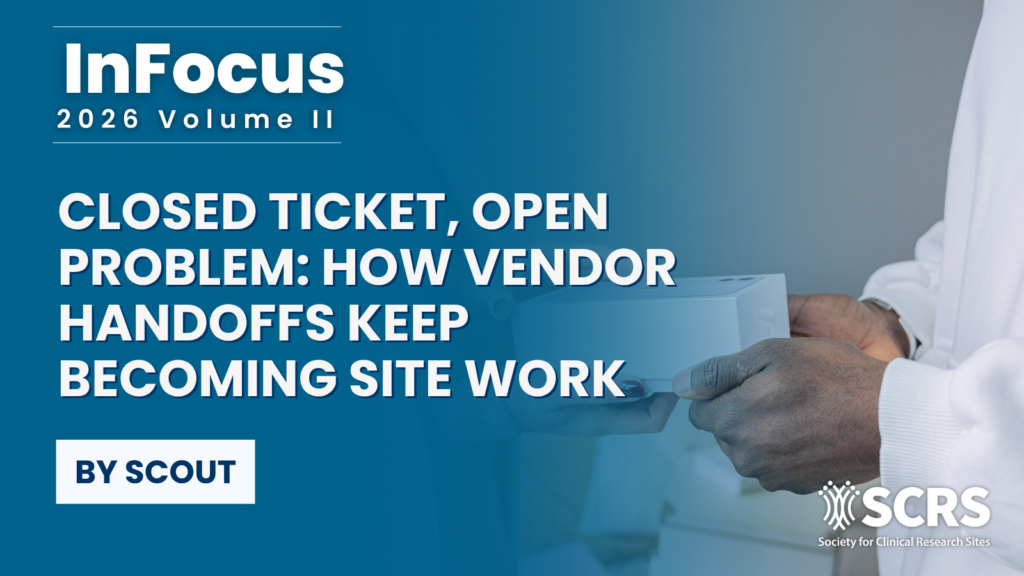
Participants call the site when payments, travel, or support requests stall, even when another provider owns the answer. This article examines why vendor handoffs so often return to coordinators, what a usable handoff needs to transfer, and what sites should ask before enrollment begins.

The sites that recruit best aren’t necessarily the ones with the biggest database or budget. They’re the ones that turn people, processes, and partnerships into a single working system. This article breaks down how to build that system, from cross-functional collaboration to long-term physician partnerships to using data without needing fancy tech. Learn how your site can turn independence into your biggest recruitment advantage.
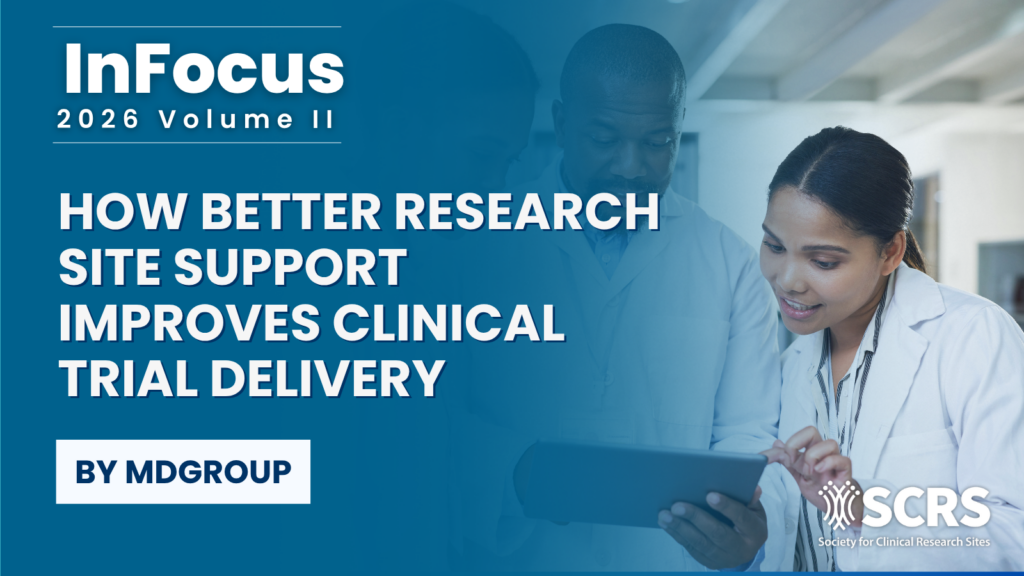
More complexity. Same expectations. Less time for patients. That’s the reality facing research sites today, and it was front and center at SCRS West. This article breaks down what site leaders had to say about capacity, patient support, and what real operational relief actually looks like.

That gap between “documented” and “prepared” isn’t a training failure. It’s an operational one, and it’s costing sponsors time, compliance, and site goodwill. This whitepaper breaks down why the training model most sponsors rely on can’t meet what ICH E6(R3) now expects, why legacy LMS platforms and CRO-delivered training can’t close the gap, and what a sponsor-owned approach looks like when it works. Read on for proof points from sponsors who’ve already made the switch.
The organizations that benefit most from AI won’t be the ones with the newest platforms or biggest tech budgets. They’ll be the ones who already did the hard work of connecting research to healthcare and building real trust with patients and communities. Read on to see why the future of AI in clinical research depends less on the tools and more on the foundation you build before you use them.
Latest News from SCRS
September 3, 2026 – The Society for Clinical Research Sites (SCRS) today announced the finalists for the 2026 Eagle Award, the clinical research industry’s leading tool for evaluating and improving how sponsors and CROs partner with research sites. Sponsor finalists: Bayer, Johnson & Johnson Innovative Medicine, Merck/MSD, Novo Nordisk, Sanofi CRO finalists: IQVIA, Medpace, Novotech, Parexel, Worldwide Clinical Trials For more than a decade,
The Society for Clinical Research Sites (SCRS) congratulates David Vulcano on his appointment as CEO of the Association of Clinical Research Professionals (ACRP). At the invitation of SCRS Founder Christine Pierre, David joined the SCRS Leadership Council in 2015 and has served as Honorary President since 2021.
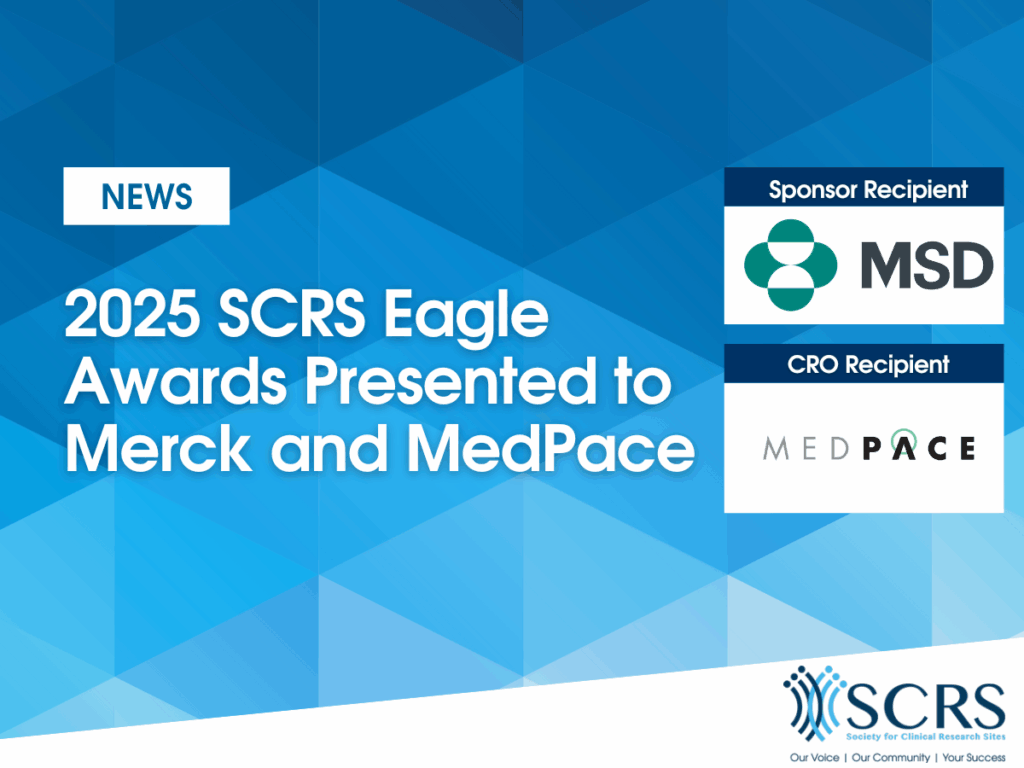
October 13, 2025 – The Society for Clinical Research Sites (SCRS) proudly announces the 2025 recipients of the prestigious SCRS Eagle Award: Merck (known as MSD outside the United States and Canada) in the sponsor category and Medpace in the CRO category. Now in its 16th year, the SCRS Eagle Award celebrates outstanding collaborations between clinical

Let Your Voice Be Heard
If you’d like improve the clinical trial ecosystem, the Site Landscape Survey offers a direct channel to ideate solutions that address real challenges site faces daily.
Share your perspective on current trends, operational challenges, and collaborative barriers to help guide industry initiatives that truly matter to site operations.
Open to sites, sponsors, CROs, and service providers globally.
About SCRS
Founded in 2012, SCRS is a global trade organization that unifies the voice of the clinical research site community to create greater site sustainability. Representing more than 11,000 sites in 50+ countries, SCRS membership provides sites with a community dedicated to advocacy, education, connectivity and mentorship. SCRS is an influential voice for sites and an active partner in industry-wide initiatives and dialogues focused on improving the clinical research enterprise. Our Voice. Our Community. Your Success.