SCRS Resources
Insights & Publications
Industry Insights, Research, & Resources for Clinical Research Sites
Explore the latest insights from SCRS, including industry news, research publications, white papers, and expert perspectives focused on clinical research site success. These resources provide practical guidance on site operations, collaboration with sponsors and CROs, patient engagement, and emerging trends shaping the clinical research landscape.
September 3, 2026 – The Society for Clinical Research Sites (SCRS) today announced the finalists for the 2026 Eagle Award, the clinical research industry’s leading tool for evaluating and improving how sponsors and CROs partner with research sites. Sponsor finalists: Bayer, Johnson & Johnson Innovative Medicine, Merck/MSD, Novo Nordisk, Sanofi CRO finalists: IQVIA, Medpace, Novotech, Parexel, Worldwide Clinical Trials For more than a decade, the Eagle Award has been built on feedback directly from clinical research sites across the globe. Each year, sites score their sponsor and CRO partners across key categories, including business development, budgeting, contracts, payments, communication, study startup, and more. New in 2026, site feedback is aligned to active study relationships in the past year and linked to specific therapeutic areas and site types. Each evaluation category includes qualitative feedback, giving sponsors and CROs context behind their scores. This gives the industry its most objective view of what is working well and opportunities for improvement within site-industry relationships. “The SCRS Eagle Award places objective site feedback at the center of improving cross-industry collaboration. The output is different than internal feedback loops or even NPS findings. Sites scored across the dimensions that define practical study performance and support the industry’s collective success,” said Sean Soth, Senior Vice President of Global Business Partnerships with SCRS. “SCRS congratulates this year’s finalists for their continued commitment to site success and looks forward to celebrating the recipients.” One sponsor and one CRO that consistently earn top marks across all categories will be named the 2026 Eagle Award recipients. An executive summary of the results will be distributed to all SCRS site members and Global Impact Partners. Sponsors and CROs will also have the option to invest in deeper site intelligence reports, covering areas of exceptionality, areas of need, and how their organization compares to peer groups. The 2026 Eagle Award recipients will be announced on October 17, 2026 at the Eagle Award Gala & Awards Ceremony, sponsored by Advarra, at the SCRS Global Site Solutions Summit in Orlando, Florida. About the Society for Clinical Research Sites (SCRS) The Society for Clinical Research Sites (SCRS) is the leading advocacy organization dedicated to unifying the voice of the global clinical research site community. Representing more than 12,000 site members globally, SCRS facilitates industry collaborations and conversations dedicated to site-focused advocacy, education, mentorship, and connection. SCRS is an active and influential champion for sites in industry initiatives to ensure that the perspective of sites is heard and valued. Learn more and get involved at myscrs.org/.
The organizations that benefit most from AI won't be the ones with the newest platforms or biggest tech budgets. They'll be the ones who already did the hard work of connecting research to healthcare and building real trust with patients and communities. Read on to see why the future of AI in clinical research depends less on the tools and more on the foundation you build before you use them.
That gap between "documented" and "prepared" isn't a training failure. It's an operational one, and it's costing sponsors time, compliance, and site goodwill. This whitepaper breaks down why the training model most sponsors rely on can't meet what ICH E6(R3) now expects, why legacy LMS platforms and CRO-delivered training can't close the gap, and what a sponsor-owned approach looks like when it works. Read on for proof points from sponsors who've already made the switch.
More complexity. Same expectations. Less time for patients. That's the reality facing research sites today, and it was front and center at SCRS West. This article breaks down what site leaders had to say about capacity, patient support, and what real operational relief actually looks like.
The sites that recruit best aren't necessarily the ones with the biggest database or budget. They're the ones that turn people, processes, and partnerships into a single working system. This article breaks down how to build that system, from cross-functional collaboration to long-term physician partnerships to using data without needing fancy tech. Learn how your site can turn independence into your biggest recruitment advantage.
Participants call the site when payments, travel, or support requests stall, even when another provider owns the answer. This article examines why vendor handoffs so often return to coordinators, what a usable handoff needs to transfer, and what sites should ask before enrollment begins.
CNS trials are among the most operationally complex studies in clinical research, yet the day-to-day experiences of the raters who administer them are rarely part of the conversation. To change that, Medidata and SCRS, in collaboration with Cogstate, surveyed clinical site staff actively running CNS trials to understand their operational challenges, technology experiences, and priorities for improvement. The findings reflect the lived experiences of CNS raters and provide a data-driven foundation for rethinking how trials and technology should be designed and supported.
2025 was a year of meaningful momentum for SCRS, marked by growing membership, expanding global reach, and practical initiatives that translated real site challenges into industry-wide action. Through education, advocacy, mentorship, and connection, SCRS deepened its support for the clinical research site community — launching training-reduction guidance, strengthening site-sponsor collaboration, and bringing together sites, sponsors, and CROs across summits on multiple continents. At the heart of it all remained a single consistent message: progress in clinical research depends on site success.
Sites are not facing a single AI governance challenge. They're facing two simultaneously — and they have almost no infrastructure for either. On one side, sponsors and CROs are pushing AI tool adoption at an accelerating pace, often without providing sites the training, validation guidance, or vendor standards needed to use those tools responsibly.
The Society for Clinical Research Sites (SCRS) congratulates David Vulcano on his appointment as CEO of the Association of Clinical Research Professionals (ACRP). At the invitation of SCRS Founder Christine Pierre, David joined the SCRS Leadership Council in 2015 and has served as Honorary President since 2021.
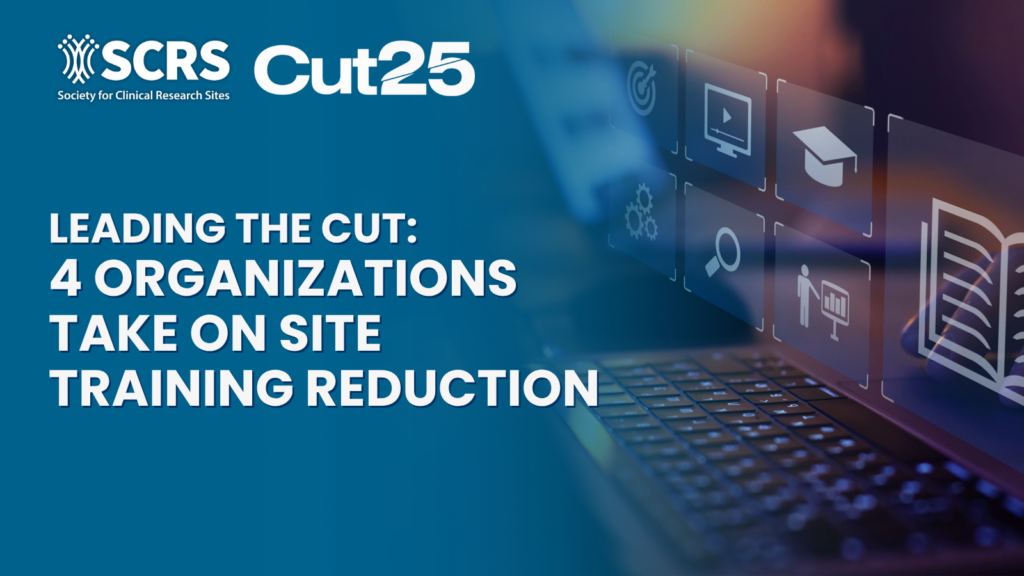
Four organizations share how they've meaningfully cut redundant site training burdens through role-based assignments, on-demand guidance, and intuitive design — all without compromising compliance. Their shared takeaway: training should enable performance, not create a paper trail.
Traditional budget models haven't kept up with the realities of modern trial execution. Sites absorb hidden costs that sponsors don't account for, leading to adversarial negotiations, delayed startups, and strained resources. Forward-thinking sponsors are changing that with technology fees, contingency funds, and a genuine effort to understand what sites actually need.
Press & Media
We’re glad to support media coverage of clinical research site issues. Contact us for the latest information or to schedule an interview with our team.